How much time does your team spend tracking cloud costs instead of improving the systems that generate them?
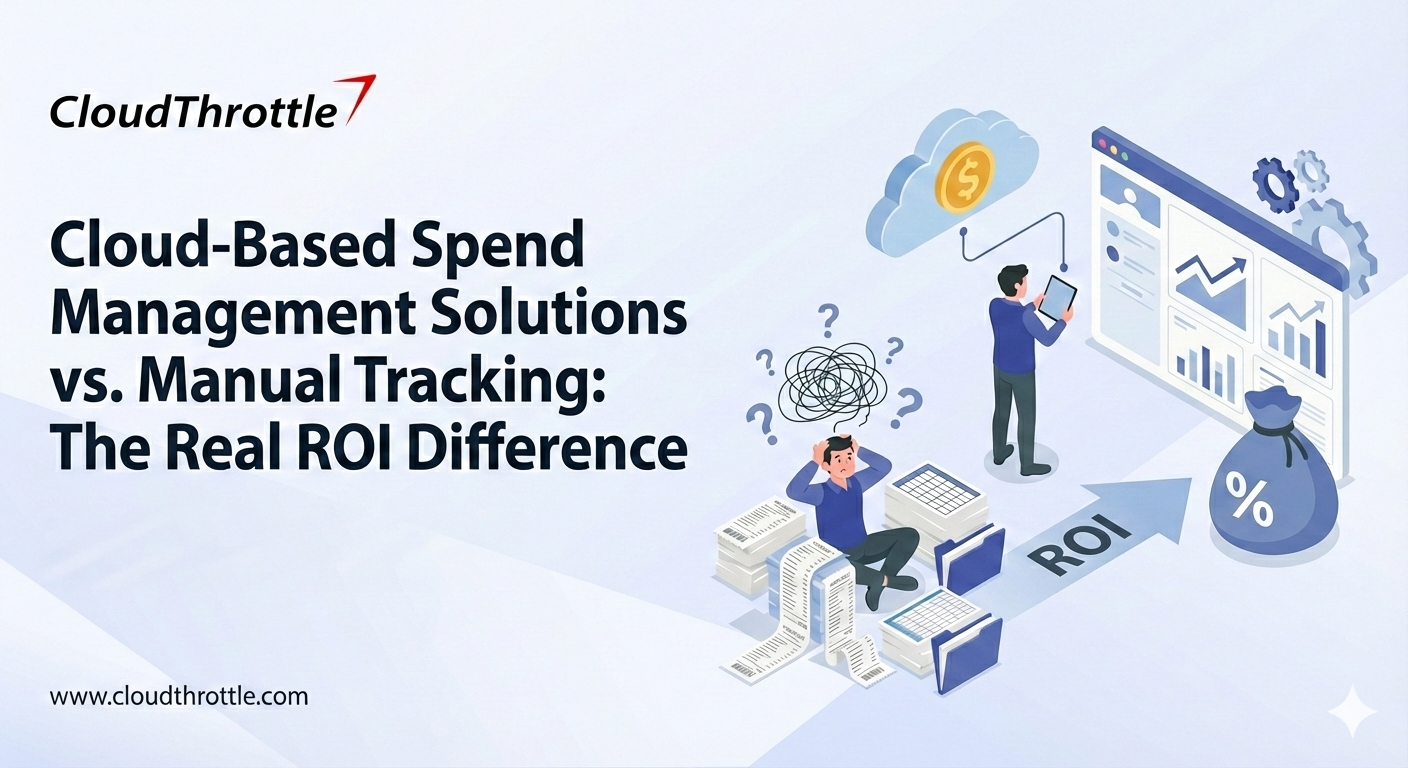
As cloud environments grow more complex, many teams still rely on spreadsheets, exports, and manual reviews to understand spending. At first, this approach feels controlled and familiar. Over time, however, manual tracking struggles to keep up with dynamic workloads, frequent architecture changes, and real-time scaling behavior. Cloud-based spend management solutions address this gap by providing continuous automated allocation and near real-time insights that align financial awareness with engineering decisions. The difference in return on investment is not just lower spend, but faster decisions and more predictable growth.
Read the full blog to understand the real ROI difference between cloud-based spend management solutions and manual tracking
What is Manual Tracking?
Manual tracking refers to monitoring cloud spend through exported billing reports and spreadsheets reviewed at regular intervals. Teams usually collect AWS cost data after usage has already occurred and billing data is finalized, which places analysis behind real system behavior. This delay creates a gap between engineering decisions and financial visibility, and the gap widens as architectures grow more complex.
Downsides of Manual Tracking
- Delayed cost visibility: Manual tracking surfaces cloud spend only after billing data is exported and reviewed. This delay separates engineering actions from financial outcomes. It further causes teams to react after costs are already incurred.
- High operational overhead: Manual reviews require repeated data collection and reconciliation. Teams spend time maintaining reports rather than improving systems. It increases effort without improving cost control.
- Error-prone analysis: Manually handled cost data often contains duplicates and missing values. The same data is also filled with inconsistent formats, which reduces confidence in conclusions and slows decision-making.
- Poor scalability: Manual tracking methods struggle as environments expand across accounts and services. What works for small setups becomes unmanageable at scale, which allows cost inefficiencies to grow unnoticed.
What are Cloud-Based Spend Management Solutions?
Cloud-based spend management solutions are systems that continuously monitor cloud costs as workloads run. They ingest usage and billing data automatically and connect spend to services and ownership in near real time. Cost behavior becomes visible alongside system activity, which supports timely decisions during development and operations. Engineering teams see how changes affect spend as they occur, and finance teams gain clarity without waiting for invoices. Cost awareness stays aligned with demand rather than drifting due to delayed reporting as environments scale.
Benefits of Cloud-Based Spend Management Solutions
Cloud-based spend management solutions address the structural gaps created by delayed and fragmented cost visibility. These systems treat cloud spend as an operational signal, which keeps financial behavior aligned with how infrastructure actually runs. As this alignment improves, cost control shifts from reactive correction to continuous oversight.
Here are the top benefits of cloud-based spend management solutions:
- Continuous cost visibility
Cloud-based spend management solutions observe usage and spend as workloads execute. This observation keeps cost behavior tied to traffic patterns, scaling activity, and deployment changes. Because spend is visible while systems operate, teams detect abnormal growth early, before it becomes a recurring expense.
- Clear ownership and accountability
Visibility becomes effective only when responsibility is defined. Cloud-based spend management solutions associate spend with specific services, environments, and teams. This association turns cost reviews into ownership discussions. It leads to corrective action within the systems that generate spend.
- Faster and more reliable decisions
Defined ownership shortens the path between signal and action. Teams evaluate scaling rules, capacity changes, and configuration updates with immediate financial context. Decisions improve because trade-offs are assessed using current system behavior signals rather than historical summaries.
- Reduced operational effort
Decision quality improves when reporting friction is removed. Automated ingestion and categorization replace manual exports and spreadsheet reconciliation. Operational effort declines because teams no longer maintain cost reports to understand spending behavior.
- Sustainable cost control as systems grow
Cost discipline weakens when environments expand without matching visibility. Cloud-based spend management solutions preserve clarity across accounts, regions, and services. This preservation prevents inefficiencies from embedding themselves as systems scale.
Audit Readiness and Financial Governance Impact
- Audit preparation effort: Manual tracking requires teams to reconstruct historical spend using exports and spreadsheets. This reconstruction consumes time because data lacks consistent ownership and context. Cloud-based spend management maintains continuous records, which reduces effort during audits and reviews.
- Policy enforcement visibility: Governance policies rely on visibility to remain effective. Manual tracking shows outcomes after spend occurs, which limits enforcement strength. Cloud-based spend management reflects policy impact as systems operate, which supports timely correction.
- Traceability of financial decisions: Financial decisions require traceable inputs to remain defensible. Manual tracking weakens traceability because assumptions replace real usage signals. Cloud-based spend management preserves decision context by linking spend to system behavior.
- Compliance reporting confidence: Compliance reviews depend on consistent and explainable data. Manual tracking introduces uncertainty due to fragmented reporting methods. Cloud-based spend management improves confidence because cost data remains structured and continuously updated.
- Governance consistency over time: Governance effectiveness declines when visibility fluctuates. Manual tracking varies in quality as environments change. Cloud-based spend management sustains governance because cost insight remains stable as systems evolve.
Cloud-Based Spend Management vs. Manual Tracking: Understanding the ROI Gap
Here is a clear comparison between cloud-based spend management and manual tracking that explains where the real return on investment gap emerges:
- Speed of Financial Feedback
Cloud-based spend management solutions surface cost behavior as infrastructure activity occurs. This timing allows teams to react while changes are still reversible. Manual tracking delays visibility until reports are generated, which means action begins only after the spend has already settled.
- Accuracy of Cost Attribution
Cloud financial management solutions connect spend to services, environments, and ownership signals. This connection explains why costs exist and where they originate. Manual tracking aggregates spend at higher levels, which hides the systems responsible and weakens accountability.
- Impact on Engineering Productivity
Cloud expense tracking solutions reduce the time spent preparing and validating cost data. Engineering effort shifts toward system improvement because reporting happens automatically. Manual tracking requires repeated data handling, which diverts effort away from performance and reliability work.
- Risk of Cost Drift
Cloud spend management software exposes gradual cost increases as they form. Early visibility prevents small inefficiencies from becoming permanent expenses. Manual tracking reveals drift only after it accumulates across billing cycles.
- Budget Predictability
Cloud-based spend management solutions stabilize forecasting by more closely reflecting current workload behavior. Spending trends align with real usage, which improves planning confidence. Manual tracking relies on historical summaries, which reduces accuracy during growth or architectural change.
- Alignment Between Finance and Engineering
Cloud expense management solutions provide a shared view of spend across technical and financial teams. Decisions improve because both sides reference the same signals. Manual tracking creates separate interpretations, which slows alignment and decision-making.
- Scalability of Cost Governance
Cloud spend management software retain clarity as environments expand across accounts and regions. Governance scales because visibility grows with complexity. Manual tracking degrades as the scope increases, which creates oversight gaps.
- Long-Term Return on Investment
Cloud-based spend management solutions deliver compounding value by preventing inefficiencies early. Cost discipline strengthens as systems evolve. Manual tracking offers short-term awareness but weakens control over time.
ROI Comparison: Cloud-Based Spend Management vs. Manual Tracking
Below is a concise comparison that highlights how cloud-based spend management and manual tracking differ across key ROI factors:
Disclaimer: For informational purposes only, based on publicly available information at the time of publication. Pricing, features, and capabilities may change; verify with vendors. No endorsement or warranties implied.
Conclusion
Reducing cloud spend sustainably depends on how closely cost awareness follows system behavior. Manual tracking creates delay and uncertainty, which weakens long-term control as environments scale. Cloud-based spend management significantly closes this gap by aligning financial insight with engineering activity. Teams gain predictability, accountability, and durable ROI over time.
Take control of cloud costs with CloudThrottle and turn spend visibility into a lasting operational advantage.
Note: Information reflects publicly available sources at the time of publication and may change.