Are you trying to reduce AWS costs even though your infrastructure already feels right-sized? Many teams assume cost reduction means cutting resources. But the real opportunity lies in how those resources are governed and optimized over time. AWS cost optimization focuses on improving efficiency, visibility, and governance so spending aligns with actual demand and business value.
Read the full blog to learn practical AWS cost reduction strategies that help you reduce AWS costs while keeping your infrastructure intact.
Why Downsizing Is Not the Right AWS Cost Strategy?
Reducing AWS costs by downsizing infrastructure often feels like the fastest solution. But it introduces risks that outweigh short-term savings. Applications face performance degradation and reduced reliability during peak usage when capacity is cut without fully understanding workload behavior. These disruptions then force teams into reactive scaling. It adds operational overhead and often can cost more than the original savings.
Sustainable AWS cost efficiency depends on optimization rather than removal. Organizations achieve AWS cost reduction by improving how resources are governed and used. They do this while maintaining stability, performance, and long-term operational confidence.
Understanding What Drives AWS Costs
Here are the key factors that drive AWS costs across most environments:
- Compute, Storage, Networking, and Managed Services
AWS costs grow through a combination of compute usage, expanding storage, data transfer, and managed services that scale automatically in the background. Each of these categories reacts differently to demand, which means cost increases rarely move in a straight line. Teams find it difficult to explain why spending rises even when usage appears stable without clear visibility across these layers.
- Architecture, Usage Patterns, and Governance
Design choices and day-to-day usage patterns shape AWS spending over time. Inefficient architectures, uneven scaling policies, and weak governance allow small inefficiencies to persist and compound. As workloads evolve, these structural gaps become increasingly expensive unless teams address them deliberately through sound AWS cost management practices.
- Lack of Real-Time Cost Visibility
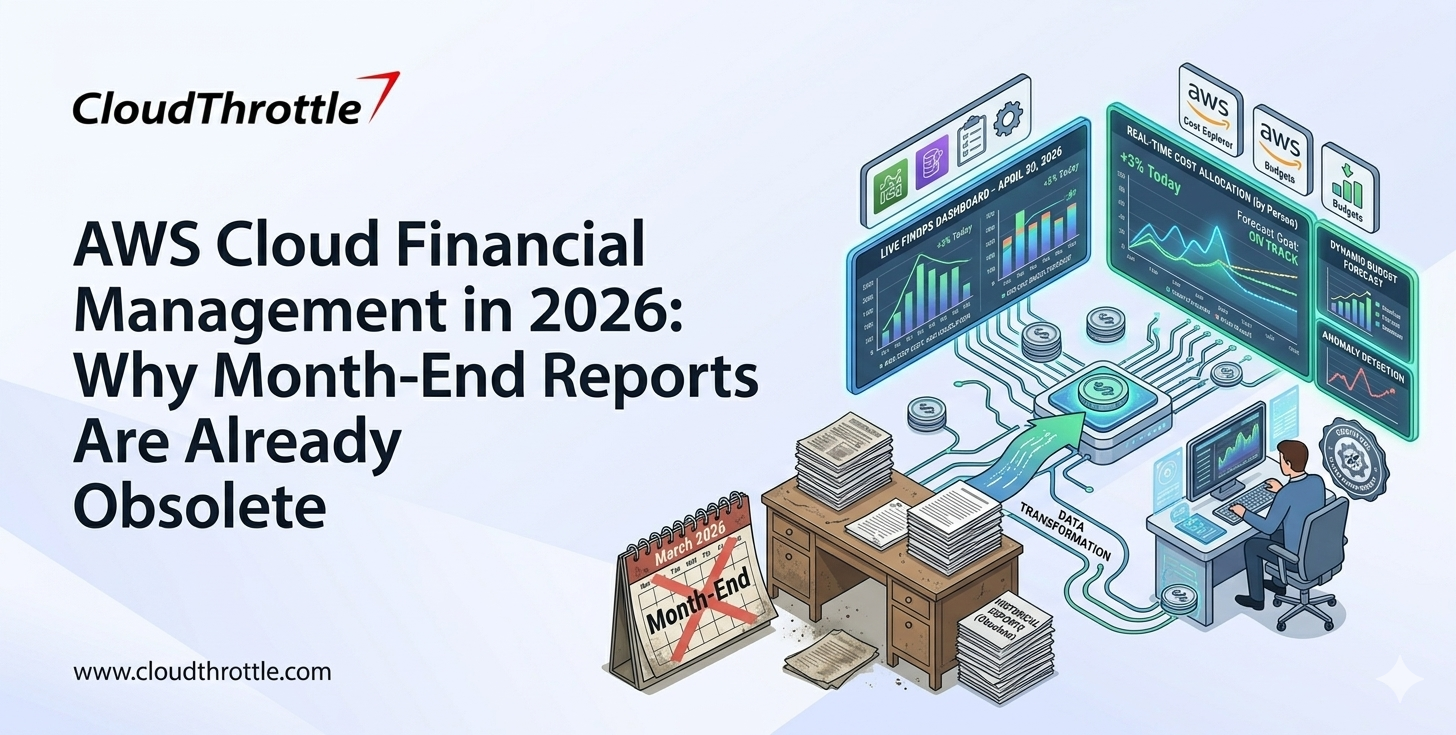
Many organizations depend on delayed billing reports that reveal costs only after the billing cycle closes. This delay breaks the feedback loop between usage and spend, which prevents timely correction. Strong near-real-time visibility reconnects usage with cost signals and forms the foundation for effective AWS cost optimization.
- Uncontrolled Scaling and Automation Drift
Auto-scaling and managed services simplify operations, yet they introduce risk when limits and guardrails are absent. Over time, scaling behavior drifts away from real demand, creating persistent overspend. AWS cost control ensures automation supports efficiency and reliability through explicit limits and guardrails, rather than silently inflating bills.
Core Principles of AWS Cost Optimization
- Visibility Before Optimization: Optimization succeeds only when teams understand where costs originate and how they change during normal operations. Clear visibility ensures that actions target true inefficiency instead of critical capacity.
- Ownership and Accountability Across Teams: AWS cost control improves when teams connect technical decisions with financial impact. Ownership builds accountability, which encourages smarter design and scaling choices across engineering and operations.
- Continuous Improvement Instead of One-Time Savings: AWS cost optimization is not a single initiative. Regular review and adjustment level up efficiency without sacrificing reliability or performance. This takes place as workloads shift and demand changes.
Proven AWS Cost Reduction Strategies That Preserve Infrastructure
Here are the most effective AWS cost reduction strategies that preserve performance and reliability:
1. Improve AWS Cost Visibility and Allocation
Effective AWS cost reduction begins with understanding where money flows and why. Visibility at the service and workload level connects usage patterns with spend, which replaces assumptions with evidence.
When cost data reflects real activity, teams can trace increases back to specific systems instead of reacting to aggregate bills. Clear allocation then assigns responsibility, which turns AWS cost management into a shared discipline rather than a finance-only exercise.
The following practices establish clarity and accountability:
- Service-level and workload-level insight: Break costs down by service, application, and environment to reveal true drivers.
- Consistent tagging standards: Apply and enforce tags that link resources to teams, projects, and owners.
- Cost allocation and accountability: Use allocation rules to ensure every dollar has a clear owner and purpose.
2. Optimize Compute Usage Without Downsizing
Reducing AWS costs does not require removing capacity that supports reliability. Compute optimization focuses on aligning resources with actual demand so performance remains intact. Teams reduce waste while preserving headroom for growth by studying utilization trends instead of static sizing. This approach strengthens AWS cost efficiency because it replaces blanket cuts with targeted adjustments.
These methods improve compute efficiency safely:
- Rightsizing from utilization trends: Adjust instance size and count based on observed usage over time.
- Scheduling non-production workloads: Stop or scale down development and test environments during idle periods.
- Instance family and generation optimization: Move to newer or better-fit instance types that deliver more performance per dollar.
3. Control Storage Costs Without Data Deletion
Storage costs often rise quietly because data rarely disappears on its own. Controlling these costs requires smarter placement and lifecycle management rather than aggressive deletion. When data moves through tiers based on access patterns, AWS cost reduction happens naturally without risking availability or regulatory compliance.
The following actions keep storage spend under control:
- Storage tier optimization: Shift infrequently accessed data to lower-cost storage classes.
- Lifecycle policies and retention control: Automate movement and expiration based on business rules.
- Snapshot and backup optimization: Remove redundant snapshots and right-size backup frequency to actual recovery needs.
4. Reduce Hidden Networking and Data Transfer Costs
Networking charges often surprise teams because they sit behind normal application behavior. Data moving across availability zones, regions, or out of AWS accumulates cost that is rarely visible during design. Awareness of these flows allows architectural refinement that improves AWS cost control without affecting functionality.
These practices expose and reduce network-related spend:
- Inter-AZ and inter-region traffic visibility: Identify where data transfer fees originate and why.
- Architectural adjustments: Redesign communication paths to minimize unnecessary cross-zone or cross-region traffic.
- Caching and data locality strategies: Keep data closer to compute to reduce repeated transfers.
5. Optimize Reserved Instances and Savings Plans
Commitment-based discounts deliver savings only when aligned with real usage. Poorly matched commitments turn into sunk costs that weaken AWS cost efficiency over time. Continuous evaluation keeps coverage balanced with utilization so long-term planning supports actual workload behavior rather than static forecasts alone.
These steps keep commitments effective:
- Coverage versus utilization balance: Ensure committed spend matches consistently running workloads.
- Avoiding underused commitments: Identify and correct reservations that no longer fit demand.
- Alignment with real behavior: Adjust Savings Plans and Reserved Instances as workloads evolve.
When these strategies operate together, AWS cost optimization becomes a steady process rather than a reactive exercise. Infrastructure remains stable, performance stays protected, and AWS cost reduction occurs through informed decisions instead of disruptive cuts.
AWS Cost Management for Modern and Shared Workloads
Modern AWS environments rely on shared platforms, automation, and fast-moving workloads. It makes cost control more complex than managing individual resources. As usage becomes distributed across teams and experiments, effective AWS cost management depends on fair allocation and proactive control rather than manual cleanup.
Below are the key focus areas for managing costs in modern and shared AWS workloads:
- Kubernetes and Container Cost Optimization:
Container platforms abstract infrastructure, which often hides the real cost of compute and networking behind clusters and namespaces. Cost optimization starts by translating cluster-level spend into workload and team-level insight. When teams understand how their pods, services, and scaling choices affect AWS costs, container efficiency improves without slowing delivery. - Shared Service Cost Allocation:
Load balancers, networking layers, observability tools, and security services support multiple teams at once, which makes ownership unclear. Without allocation, these shared costs grow quietly. Assigning shared spend proportionally restores accountability and turns common infrastructure into a managed asset instead of an uncontrolled expense. - Managing AI, GPU, and Experimental Workloads:
AI training jobs and GPU-backed services scale rapidly, which can inflate AWS bills before results are evaluated. Cost management connects spend to experiments, models, and outcomes so teams understand value before scaling further. Guardrails ensure innovation continues while AWS cost efficiency remains intact.
Embedding AWS Cost Efficiency Into Engineering Workflows
AWS cost reduction strategies last only when cost awareness becomes part of everyday engineering decisions. Following are the practices that embed AWS cost efficiency directly into engineering workflows:
- Making Cost Visible to Engineers:
Engineers act faster when cost data appears alongside performance and reliability metrics. Dashboards that show service-level spend connect architectural choices with financial impact, which encourages smarter AWS resource optimization during development and scaling. - Cost-Aware Architecture Decisions:
Early design choices around storage, networking, and managed services shape long-term AWS costs. Reviewing architecture with cost context helps teams balance resilience, performance, and efficiency before patterns become expensive defaults. - Preventing Inefficiencies Before Deployment:
Budget checks, scaling limits, and policy controls applied during CI/CD prevent oversized resources and unsafe defaults from reaching production. This approach shifts AWS cost control upstream, where fixes are simpler and savings compound over time.
Tools That Support AWS Cost Optimization
Enlisted below are the tools that support effective AWS cost optimization:
- AWS-Native Cost Management Capabilities:
AWS provides built-in tools that offer foundational visibility into spend and usage. These capabilities help teams track service-level costs, set budgets, and receive alerts. They work best when combined with deeper allocation and optimization practices while native tools establish a baseline for AWS cost management. - Third-Party AWS Cost Management Platforms: External platforms extend visibility beyond basic billing by adding advanced cost allocation and governance workflows. These tools connect AWS spending to teams and business outcomes. It further strengthens accountability and supports long-term AWS cost efficiency.
- Automation and Anomaly Detection Tools:
Automation reduces manual oversight by detecting unusual spending patterns and applying corrective actions early. Anomaly detection highlights deviations from normal usage before they grow into overruns. It ultimately shifts AWS cost control from reactive investigation to proactive prevention. - Infrastructure Optimization and Rightsizing Tools:
Rightsizing tools analyze utilization trends across storage and databases to recommend adjustments that match real demand. These tools support sustainable AWS resource optimization without disrupting performance. They do this by continuously aligning capacity with usage. - Policy and Governance Enforcement Tools:
Governance tools apply limits and policies at the moment resources are created or scaled. This enforcement prevents inefficient configurations from entering production. It keeps AWS cost reduction strategies aligned with architectural standards.
Common Mistakes to Avoid When Reducing AWS Costs
AWS cost optimization often fails not because of missing tools, but because of misaligned approaches that focus on short-term cuts rather than lasting efficiency. Avoiding these mistakes keeps savings durable and protects system reliability.
Here are the most common mistakes organizations make when reducing AWS costs:
- Cutting Resources Instead of Fixing Inefficiencies: Removing capacity without understanding usage patterns risks performance and availability. True AWS cost efficiency comes from optimizing how resources are used, not simply reducing them under pressure.
- Ignoring Shared and Indirect Costs: Networking, security, and platform services often support multiple workloads, which makes their cost easy to overlook. When shared costs remain unallocated, teams underestimate total spend and miss opportunities for meaningful optimization.
- Treating AWS Cost Optimization as a One-Time Effort: Cloud environments change constantly, which means savings decay without ongoing review. Sustainable AWS cost management depends on continuous visibility, regular optimization cycles, and evolving governance.
- Over-Automating Without Guardrails: Automation applied without limits can amplify mistakes at scale. Safe AWS cost control requires policies and thresholds that guide automation so efficiency improves without compromising stability.
- Relying Only on Monthly Billing Reports:
Reports that arrive after the billing cycle closes delay corrective action. Real-time insight and alerts are essential for preventing hidden costs and leveling up control as workloads evolve.
Conclusion
AWS cost optimization works best when efficiency replaces reaction and visibility guides operational and financial decisions. By focusing on optimization instead of downsizing, teams protect performance while reducing waste across compute, storage, networking, and modern workloads. Sustainable AWS cost management comes from clear ownership, continuous monitoring, and cost-aware engineering practices that evolve with the environment. When these principles align, AWS spending becomes predictable, controlled, and directly tied to business value rather than unexpected overruns.
Take control of your AWS costs with CloudThrottle and turn efficiency into a lasting advantage.
Note: Information reflects publicly available sources at the time of publication and may change.