Why do cloud costs become a point of friction even when both finance and engineering teams are doing their jobs well?
Cloud spending rarely rises because of poor decisions. It grows because financial controls often move more slowly than cloud infrastructure. Engineering teams scale systems to meet demand, while finance teams review costs after usage has already settled. This timing gap creates misalignment, which leads to confusion, delayed action, and growing spend that is difficult to explain. Cloud FinOps exists to close this gap by giving both teams a shared view of cost behavior tied to real system activity.
Read the full blog to understand how Cloud FinOps helps finance and engineering finally align on cloud costs.
What Is Cloud FinOps? A Practical Definition
Cloud FinOps is an operating model that connects cloud usage, financial accountability, and engineering decisions into a shared, continuous feedback loop. It works by translating live cloud consumption into financial signals that both finance and engineering teams can act on at the same time. This translation matters because cloud costs are created by system behavior, not by static budgets. Cloud FinOps keeps cost understanding aligned with those changes as workloads scale, architectures change, and deployments occur. The model succeeds when financial insight moves at the same speed as infrastructure activity, which allows decisions to remain informed, timely, and explainable.
Core Principles of Cloud FinOps
- Shared cost visibility: Cloud FinOps requires cost data to be visible to both finance and engineering teams. This visibility connects spend directly to system behavior, which removes ambiguity around where costs originate.
- Ownership at the service level: Cost control improves when ownership matches how systems are built. Cloud FinOps encourages responsibility at the service or workload level. It further ties financial outcomes to technical decisions.
- Continuous forecasting: Forecasting must adapt as usage changes. Cloud FinOps treats forecasts as living models that update with demand patterns and pricing exposure, helping reduce variance over time.
- Decision-making during usage: Cost insight delivers value only when it arrives early. Cloud FinOps emphasizes decisions while systems operate, which prevents corrective action from being delayed until billing cycles close.
- Financial accountability without delivery friction: Controls should guide behavior without slowing teams down. Cloud FinOps sets financial guardrails that support responsible scaling while preserving engineering autonomy.
- Governance that scales with complexity: Oversight must remain consistent as cloud environments grow. Cloud FinOps embeds governance into daily operations, which keeps control intact across accounts, regions, and services.
The Role of Finance in a Cloud FinOps Management Framework
Here is how the role of finance shapes control, forecasting, and governance within a Cloud FinOps management framework:
- Budget governance within Cloud FinOps management
Cloud FinOps management starts with the understanding that cloud cost behavior is created by live system activity. This reality makes purely static budget governance less effective because spending changes whenever workloads scale or architectures shift. Finance teams respond by anchoring governance to cloud cost management signals that reflect real usage. Control remains intact because budgets evolve alongside infrastructure rather than reacting after spend settles.
- Forecasting through Cloud FinOps management signals
Adaptive governance requires forecasts that move at the same pace as usage. Finance teams rely on Cloud FinOps management signals to observe how demand patterns change over time. These signals feed forecasting models that adjust continuously, which reduces variance between expected and actual spend. Planning confidence improves because projections stay aligned with operational reality.
- Financial guardrails within the Cloud FinOps management framework
Forecast alignment alone does not prevent disruption when demand spikes. Finance teams extend the Cloud FinOps management framework by augmenting rigid limits with financial guardrails. These guardrails guide cloud cost management decisions while allowing systems to respond to load. Governance strengthens because boundaries influence behavior early instead of blocking scale later.
- Actionable cost insight through Cloud FinOps management
Guardrails only work when teams understand their impact. Finance teams translate Cloud FinOps management data into cost signals that engineering can act on during planning and deployment. Insight reaches decision points before spend hardens into fixed cost. Alignment improves because cloud cost management becomes part of execution rather than post-review.
The Role of Engineering in Cloud FinOps Management
Here is how the role of engineering drives cost-aware design, ownership, and scaling within Cloud FinOps management:
- Architectural decisions within Cloud FinOps management
Cloud cost management originates in how systems are designed. Engineering teams apply Cloud FinOps management principles to evaluate how architectural choices influence usage and pricing exposure. This evaluation improves predictability because cost outcomes follow directly from design behavior. Financial discussions improve since architecture explains spend rather than obscuring it.
- Service-level ownership in the Cloud FinOps management framework
Architectural awareness requires clear responsibility. Engineering teams adopt service-level ownership within the Cloud FinOps management framework, which ties cloud cost management to controllable systems. Accountability strengthens because financial impact maps to the decisions teams actually make. Cost conversations shift toward improvement instead of attribution.
- Scaling decisions guided by Cloud FinOps management signals
Service ownership shapes how scaling occurs. Engineering teams incorporate Cloud FinOps management signals alongside performance metrics when adjusting capacity. This combination stabilizes decisions because reliability and efficiency are evaluated together. Cloud cost management becomes intentional rather than reactive.
- Building cost-aware systems through Cloud FinOps management
Intentional scaling depends on observable behavior. Engineering teams design systems that expose usage patterns clearly within the Cloud FinOps management framework. Transparency preserves accurate cloud cost management because system behavior remains explainable over time. Cloud FinOps management succeeds because awareness is embedded into daily operations.
How Cloud FinOps Bridges Finance and Engineering?
- Shared cost visibility across teams
Cloud FinOps management begins by exposing cloud cost management data to both finance and engineering at the same time. This shared visibility matters because cloud spend is created by system behavior, not by financial processes. Once both teams observe the same behavior, discussions shift away from assumptions and toward observable cause and effect.
- Common metrics for usage and spend
Shared visibility becomes actionable only when it is measured consistently. Cloud FinOps management framework defines common metrics that connect usage signals with financial outcomes. Interpretation improves because finance and engineering evaluate the same numbers through the same lens.
- Alignment through ownership and accountability
Common metrics require clear responsibility to remain effective. Cloud FinOps management assigns ownership at the service or workload level, which ties spend directly to controllable systems. Accountability strengthens because financial impact traces back to the decisions teams actually make.
- Faster decisions with fewer surprises
Ownership shortens the feedback loop between action and outcome. Cloud FinOps management delivers cost insight while systems operate, which allows teams to adjust behavior before spend hardens. Surprises reduce because financial signals arrive during execution rather than after billing cycles close.
Cloud FinOps vs Traditional Cloud Cost Management
Traditional cloud cost management explains the spend after the infrastructure activity completes. This delay limits action because usage decisions have already settled. Cloud FinOps management replaces retrospective reporting with continuous insight that follows system behavior as it changes. Control improves because ownership-driven governance replaces account-level totals. Operational alignment strengthens because finance participates in decisions instead of reviewing outcomes later.
Disclaimer: For informational purposes only, based on publicly available information at the time of publication. Pricing, features, and capabilities may change; verify with vendors. No endorsement or warranties implied.
Key Metrics Used in Cloud FinOps
The following are the key metrics used in Cloud FinOps to connect cloud usage, financial accountability, and operational decision-making.
- Cost per service and cost per environment: Cloud FinOps management uses these metrics to connect spend to system boundaries. This connection explains which workloads drive cost and why they behave that way. Accountability improves because spend aligns with owned services.
- Forecast variance and budget drift: Once cost origin is clear, accuracy becomes measurable. These metrics compare projected spend with actual behavior over time. Cloud FinOps management framework uses variance to adjust forecasts continuously. Control strengthens because deviations surface early.
- Unit cost trends over time: Variance explains accuracy, while unit cost trends explain efficiency. These trends show whether growth improves or degrades cost behavior. Cloud spend optimization decisions adjust because efficiency changes become visible as systems scale.
- Ownership-based spend tracking: Unit trends require responsibility to drive improvement. Cloud FinOps management links cloud spend to accountable teams. Reviews become corrective because ownership is explicit rather than implied.
Tools That Support Cloud FinOps Practices
Here are the core tools that support Cloud FinOps by turning cloud usage data into shared financial and operational insight.
- Cloud financial management platforms: These platforms operationalize Cloud FinOps management by translating usage into financial insight continuously. Their value lies in maintaining alignment between cloud cost management data and system behavior.
- Native cloud billing and usage tools: Provider tools supply the raw signals that financial platforms depend on. Cloud FinOps management framework integrates this data to avoid fragmentation.
- Observability and monitoring systems: Cloud cost management outcomes follow technical behavior. Observability tools expose scaling and resource patterns that explain cost changes. Financial insight stays accurate because technical drivers remain visible.
- Governance and policy enforcement tools: Governance completes the loop between insight and control. Cloud FinOps management applies policies based on ownership and behavior. Discipline sustains because enforcement aligns with how systems operate.
Step-by-Step: How Cloud FinOps Works in Practice
Below is a step-by-step view of how Cloud FinOps works in practice by translating live cloud usage into continuous financial insight.
Step 1: Data ingestion from cloud platforms
Cloud FinOps management begins by collecting usage and billing data directly from cloud platforms. This ingestion matters because cloud cost management depends on observing how resources are actually consumed. As data enters continuously, financial insight stays aligned with live system behavior rather than delayed reports.
Step 2: Normalization and allocation of costs
Raw cloud data arrives in provider-specific formats that lack financial context. Cloud FinOps management framework normalizes this data into a consistent structure and allocates it to services and teams. Allocation clarifies why spend exists because costs map to ownership boundaries instead of abstract accounts.
Step 3: Continuous analysis and trend tracking
Once costs are structured and owned, analysis becomes meaningful. Cloud FinOps management tracks how spend evolves as workloads scale or configurations change. Trends surface early, which prevents inefficiencies from becoming embedded in cloud cost management.
Step 4: Forecast updates and budget alignment
Trend visibility feeds forecasting accuracy. Cloud FinOps management updates forecasts as usage behavior changes, which keeps budgets aligned with real demand. Financial planning improves because projections evolve with systems rather than lag behind them.
Step 5: Reporting and executive visibility
Aligned forecasts require clear communication. Cloud FinOps management presents insights through consistent executive views that connect financial outcomes to operational behavior. Visibility remains trustworthy because reports reflect continuous data instead of retrospective summaries.
Common Cloud FinOps Mistakes to Avoid
Here are the most common Cloud FinOps mistakes that weaken cost control, alignment, and long-term financial discipline:
- Treating FinOps as a one-time initiative: Cloud FinOps management loses effectiveness when treated as a project. Cloud cost management requires continuous practice because system behavior changes constantly. Control weakens when effort stops after initial savings.
- Enforcing budgets without ownership clarity: Budgets fail when responsibility is unclear. Cloud FinOps management framework depends on defined ownership before enforcement. Accountability improves only when teams control the systems that generate spend.
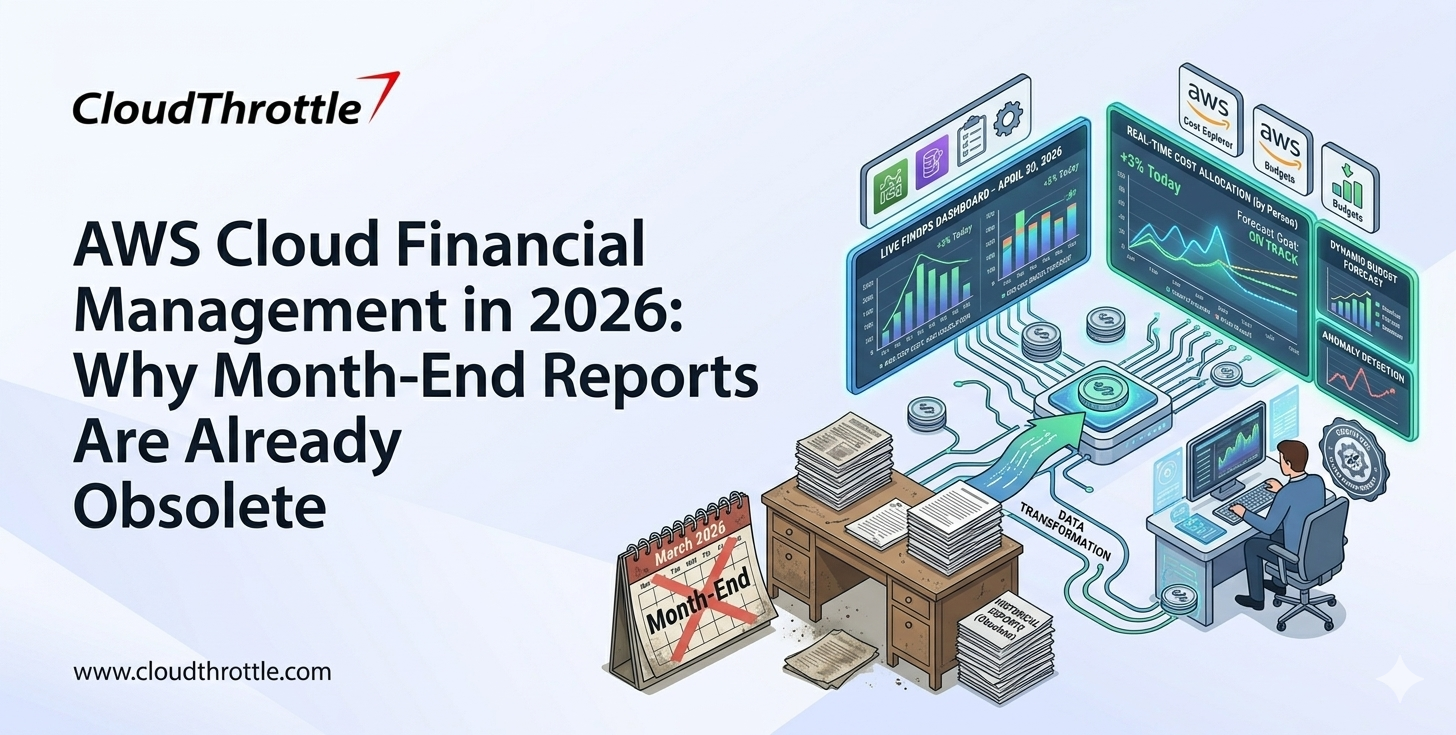
- Relying only on monthly billing data: Monthly reports explain outcomes after costs settle. Cloud FinOps management requires live signals to guide behavior during usage. Decisions suffer when cloud cost management depends solely on invoices.
- Separating financial reviews from engineering workflows: Cost insight arrives too late when reviews occur outside engineering cycles. Cloud FinOps management integrates finance into planning and scaling discussions. Alignment improves because financial signals influence decisions before execution.
Conclusion
Cloud FinOps succeeds when finance and engineering operate from the same cost reality. Shared visibility and continuous insight replace delayed reviews and reactive controls. Teams act earlier because cost behavior is understood while systems run, not after invoices arrive. Alignment strengthens as forecasts, scaling decisions, and governance follow real usage patterns. Cloud costs become more predictable because accountability matches system behavior. FinOps works when it becomes an operating model rather than a reporting exercise.
Take control of Cloud FinOps execution with CloudThrottle and align finance and engineering to operate from the same cost reality.
Note: Information reflects publicly available sources at the time of publication and may change.