Do you really know where your cloud budget goes once workloads start running? Cloud environments grow fast, yet cost visibility often lags behind usage. Teams scale services and launch new workloads, although spend patterns remain hidden inside complex billing data. Cloud spend visibility brings clarity to this complexity by connecting usage and cost into an actionable view that supports smarter decisions and sustainable growth.
Read the full blog to understand how cloud spend visibility can help you take control of your cloud costs and build a more disciplined optimization strategy.
What Is Cloud Spend Visibility?
Cloud spend visibility refers to near real-time insight into how cloud resources are used and what they cost across the organization. This insight covers usage patterns and current charges. Ownership clarity then shows which team, application, or project is responsible for each resource. Together, these views create a clear picture of where money flows and why it flows there.
Basic billing reports show totals after the fact and group charges at an account level. Cloud spend visibility goes further because it connects costs to services, environments, and business owners as activity happens. This difference turns static numbers into actionable signals that teams can use during planning and daily operations.
The Hidden Cost of Poor Visibility
Here are the hidden costs of poor visibility in cloud spend management:
- Unattributed Spend (“Orphaned” Resources): Resources remain active without a clear owner, which leaves teams unsure who should manage or retire them. Costs continue to grow while accountability remains unclear, and this gap makes cleanup efforts difficult to prioritize.
- Overprovisioning and Idle Resources: Teams allocate more capacity than actual demand requires, and unused services stay active after projects change direction. Spending rises even though business activity does not increase at the same pace.
- Shadow IT and Rogue Accounts: Departments create cloud accounts outside standard controls to move faster. These accounts escape governance, which leads to fragmented data and spend that finance teams cannot easily track.
Business Impact
- Budget Overruns: Unclear ownership and excess capacity allow costs to grow without accountability, which pushes spending beyond planned forecasts. Finance teams respond after overruns surface instead of guiding investments before waste accumulates. This reactive pattern weakens budget discipline and reduces confidence in cloud financial planning.
- Slower Decision-Making: Limited insight into cost drivers leaves leaders without a clear view of what drives value and what creates waste. Decisions around scaling, optimization, and new initiatives slow down because data does not support timely judgment.
- Reduced ROI on Cloud Investments: Cloud spending rises without a direct connection to business outcomes when visibility remains weak. Flexibility exists in theory, yet teams struggle to translate it into performance gains or efficiency. Poor visibility prevents organizations from proving value, which lowers the return achieved from cloud investments over time.
Visibility vs. Optimization: Why One Comes Before the Other
Cloud cost optimization depends on knowing where money flows, why it flows there, and who controls it. Without this understanding, optimization efforts become reactive and incomplete. Visibility builds the context that makes every optimization decision meaningful, measurable, and repeatable.
- Why Optimization Fails Without Accurate Data
Optimization requires more than intent. It requires precise knowledge of workload behavior, ownership, and demand patterns. When data lacks accuracy or depth, teams reduce spend in visible areas while hidden drivers continue to grow.
- The Optimization Illusion: Cutting Costs Blindly
Blind cost-cutting may create short-term savings while weakening system performance or resilience. Resources are reduced without understanding their role in business operations, which often forces teams to scale back up under pressure. This cycle shifts costs rather than removing them, and it erodes confidence in cloud efficiency efforts over time.
- Visibility as the Feedback Loop for Optimization
Visibility turns optimization into a controlled learning process. Each change produces signals that show how usage and cost respond. Teams study these signals and refine continuously. This feedback loop transforms optimization from a one-time exercise into an ongoing discipline grounded in evidence.
How Visibility Enables Practical Optimization
- Rightsizing: Clear usage patterns reveal where capacity exceeds demand. Teams adjust resources based on real behavior, which balances performance with cost discipline and prevents overreaction.
- Reserved Instance Planning: Stable workloads become visible through historical trends. These insights guide long-term commitments, which reduces risk and improves savings accuracy.
- Workload Prioritization: Cost linked with ownership and business importance highlights which systems deserve protection and which ones can be optimized first. This focus keeps critical operations stable while waste is removed elsewhere.
Visibility establishes the order of action. Understanding comes first, and optimization follows with purpose.
Key Elements of Effective Cloud Cost Visibility
Effective visibility connects technical usage with financial meaning. It does not stop at totals; it explains drivers, patterns, and value across the entire cloud footprint so every team sees the same reality. Here are its main elements:
- Unified View Across Multi-Cloud and Hybrid Environments
Modern architectures span multiple providers and on-prem systems. A unified view brings these environments into one perspective so leaders understand total exposure and trade-offs instead of managing fragmented reports. This connection supports holistic decisions rather than provider-specific reactions.
- Granular Cost Allocation by Ownership
Granularity assigns cost to teams, applications, projects, and environments. This structure builds accountability and replaces shared ambiguity with clear responsibility. Teams notice how their design and usage choices influence spend, which encourages more thoughtful system behavior.
- Real-Time Dashboards and Alerts
Live dashboards show how cost evolves during operations, while alerts surface anomalies before they grow into overruns. This immediacy allows teams to respond during the cycle instead of after it closes, which shifts cloud management from reactive to proactive.
- Historical Trends and Forecasting
Trends explain how demand changes over time. These patterns guide forecasts that reflect reality rather than assumptions. When forecasting rests on real usage history, budgets gain credibility and capacity planning becomes more precise.
- Mapping Costs to Business Value
Raw numbers gain meaning when connected to outcomes such as cost per customer, per transaction, or per feature. Unit economics translates infrastructure spend into business language, which helps leaders judge whether cloud investment supports growth or erodes margins.
How Cloud Spend Visibility Powers a Winning Strategy?
Visibility reshapes cloud financial management from cost control into strategic advantage. It links daily engineering choices with long-term business outcomes and turns data into a shared foundation for decision-making.
- Turning Data into Action Within Your Optimization Strategy
Clear insight highlights where intervention creates the greatest impact. Teams prioritize actions based on evidence and study results through continuous feedback. Each cycle strengthens understanding and sharpens future decisions, which makes optimization a sustained practice rather than a periodic response.
Supporting Smarter Decisions Across the Business
- Budgeting and Forecasting: Visibility ties forecasts to real demand patterns. This connection reduces surprises and builds confidence in financial planning.
- Capacity Planning: Usage signals guide scaling decisions and long-term commitments. Systems grow in step with business needs instead of reacting after pressure builds.
- Architecture Decisions: Cost awareness shapes design choices early. Engineers balance performance with efficiency, which prevents expensive patterns from becoming permanent.
Aligning Engineering, Finance, and Leadership
Visibility creates a shared language across teams. Engineers see financial impact, finance teams understand operational drivers, and leaders gain clarity on how cloud spend supports strategy. This alignment removes silos and forms the core of strong cloud financial management, where every group works from the same source of truth.
Cloud spend visibility does more than reveal numbers. It connects understanding with action, and action with outcomes, which builds the foundation for disciplined growth in the cloud.
Tools and Technologies for Cloud Spend Management
Here are the core tools and technologies that bring structure and control to cloud spend management:
- Native Tools vs. Third-Party Platforms: Native tools from cloud providers offer baseline insight into usage and billing within a single environment, which suits early-stage or simple setups. Third-party platforms bring a unified layer across providers and hybrid systems, which connects cost, usage, and ownership into one view. This broader scope supports organizations that need consistency, deeper allocation, and cross-cloud governance as complexity grows.
- Multi-Cloud Support: Effective tools bring data from all providers into a single perspective so leaders understand total exposure instead of fragmented reports. This unified view allows teams to compare trade-offs and plan capacity without blind spots across environments.
- Automation and Recommendations: Built-in automation highlights waste patterns and proposes corrective actions based on real usage. These recommendations reduce manual analysis and help teams move from awareness to action faster, which keeps spend under control as environments evolve.
- Custom Reporting: Flexible reporting aligns cost data with business structure, which allows finance, engineering, and leadership to see cloud spend through the lens that matters to them. This adaptability turns raw numbers into insight that supports daily decisions and long-term planning.
- Integration with CI/CD and ITSM: Integration with delivery pipelines and service management systems connects cost awareness to change and incident workflows. This linkage embeds financial discipline into everyday engineering activity instead of treating it as a separate review process.
- Role of AI and Automation in Proactive Management: AI studies historical patterns and real-time behavior to surface anomalies before they escalate. Automation then supports guardrails and responses that prevent waste from accumulating. Together, they shift cloud spend management from reaction to anticipation.
Best Practices to Improve Cloud Spend Visibility
Following are the best practices that strengthen cloud spend visibility across teams:
- Implement FinOps Culture and Ownership: Shared responsibility across finance, engineering, and product teams creates a culture where cost becomes part of design and delivery. Ownership replaces ambiguity, which strengthens accountability at every level.
- Enforce Tagging and Cost Allocation Standards: Consistent tagging links resources to teams, applications, and environments. This structure builds clean ownership and ensures that reports reflect how the organization actually operates.
- Set Budgets, Alerts, and Anomaly Detection: Budgets define expectations, alerts surface deviations, and anomaly detection flags unusual patterns early. Together, these guardrails prevent surprises and keep teams informed before overruns appear.
- Regular Cost Reviews and Optimization Sprints: A fixed review cadence turns visibility into action. Short optimization cycles focus teams on measurable improvements and keep momentum steady as environments change.
- Educate Teams on Cost-Aware Engineering: Training helps engineers understand how architecture and usage choices influence spend. This awareness embeds financial discipline at the source, which prevents waste before it forms.
Common Pitfalls to Avoid
The following points highlight the mistakes that often weaken cloud visibility and limit its impact:
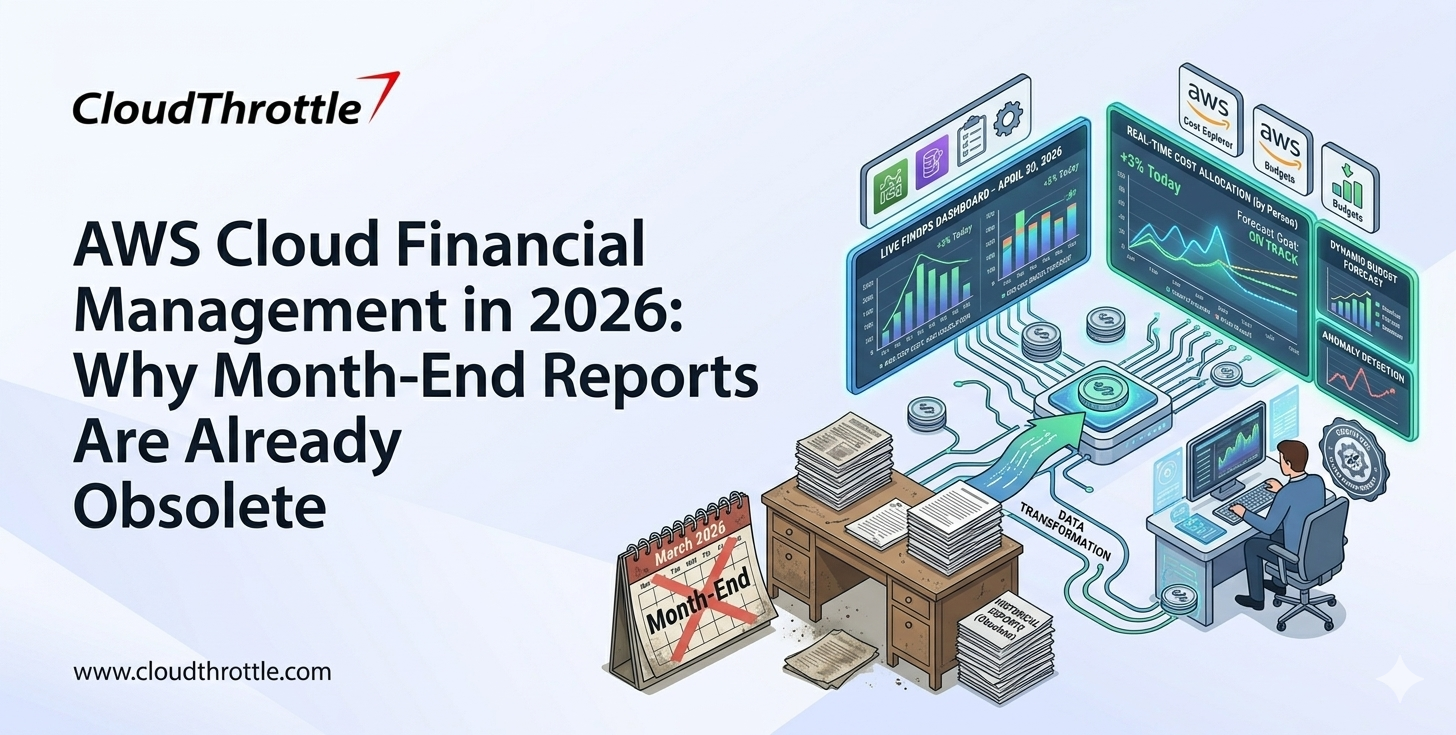
- Relying Solely on Monthly Billing Reports: Reports that arrive after the cycle closes limit response options and turn management into hindsight rather than control.
- Overwhelming Teams with Too Much Data: Excess detail without prioritization hides what matters. Teams lose focus when signals are buried in noise.
- Ignoring Business Context Behind Costs: Numbers without links to outcomes prevent leaders from judging value. Spend must connect to purpose to guide action.
- Treating Visibility as a One-Time Project: Static setups decay as systems evolve. Visibility requires continuous refinement to remain aligned with reality.
Measuring Success: KPIs for Cloud Cost Visibility
The metrics below define how organizations track progress and effectiveness in cloud cost visibility:
- Percentage of Allocated vs. Unallocated Spend: Higher allocation reflects stronger ownership and fewer blind spots across environments.
- Cost per Application, User, or Transaction: Unit metrics translate infrastructure spend into business language, which clarifies value and efficiency.
- Month-over-Month Waste Reduction: A steady decline shows that insight converts into effective action over time.
- Forecast Accuracy: Close alignment between forecast and actual spend signals that models reflect real demand patterns.
- Optimization Savings Realized: Documented savings confirm that visibility drives measurable improvement rather than surface reporting.
Future of Cloud Financial Management
Cloud financial management is shifting from reactive control toward predictive discipline. Cost signals will guide decisions before spend occurs, which allows teams to prevent waste instead of correcting it later. Real-time insight combined with intelligent models will forecast demand, surface risks early, and recommend actions that keep systems aligned with business intent as change unfolds.
FinOps will mature into a core business discipline rather than a supporting function. Visibility will evolve into value engineering, where teams design systems around outcomes such as efficiency, experience, and growth. In this future, cost becomes a strategic input that shapes architecture and long-term direction across the organization.
Conclusion: Make Visibility Your Competitive Advantage
You cannot optimize what you cannot see. Cloud spend visibility provides the clarity required to control cost, guide decisions, and connect investment with outcomes. It forms the foundation of sustainable cloud cost optimization because every improvement begins with understanding.
Organizations that treat visibility as a strategic capability gain confidence, alignment, and speed. Assess current visibility maturity, identify gaps, and take the first step toward building a disciplined approach that turns cloud investment into lasting business value. Explore how CloudThrottle brings actionable visibility and governance to your cloud spend. See how smarter insight can turn cost data into confident optimization decisions.
Note: Information reflects publicly available sources at the time of publication and may change.