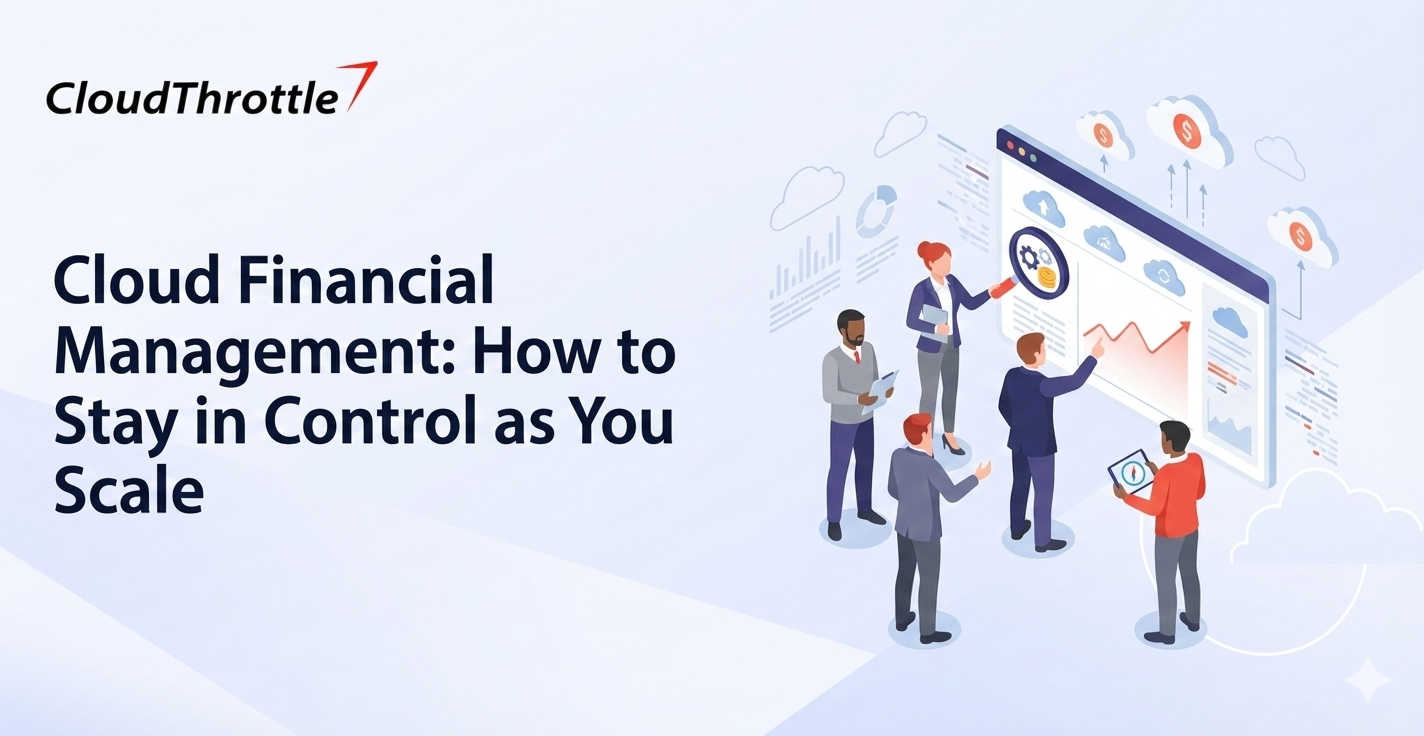
How often have you pushed to scale faster only to realize your cloud costs grew even faster than your plans? Many teams feel this pressure as they expand because spending becomes harder to predict and harder to explain. Strong cloud financial management brings brings structure and discipline to that chaos. It connects budgets, usage patterns, and product goals so leaders stay in control and teams build with confidence. The approach protects growth while keeping every cost grounded in clear decisions.
Read the full blog to learn how to apply these practices and keep your cloud finances stable as you scale.
What is Cloud financial management?
Cloud financial management is a structured approach that ties cloud spending to clear business goals through shared data and decision rules. The core purpose is to keep growth and cost in balance, so cloud investments support long-term strategy instead of creating surprise bills. Strong cloud financial management connects engineering with finance through common reports and agreed metrics, then brings product teams into the same view of value and tradeoffs.
Basic cloud cost optimization usually focuses on quick savings in compute or storage, while financial management builds repeatable processes for forecasting and continuous review. Scaling organizations need these practices because more teams, more services, and more regions create complexity that only disciplined financial habits can keep under control.
Key Pillars of Cloud Financial Management
The following pillars keep cloud financial management clear and useful as your organization grows:
- Transparent reporting and shared cost visibility: Cost data flows into simple and consistent dashboards that show trends, unit costs, and key drivers. Engineers and finance leaders look at the same numbers, which reduces disputes and supports quicker decisions.
- Accurate forecasting and budgeting for cloud spend: Historical usage and product roadmaps feed structured forecasts that translate into practical budgets. Leadership uses these forecasts to plan hiring and investment with greater confidence and fewer surprises.
- Ownership and accountability across teams: Each major product or platform area has a named cost owner who feels responsible for spend and performance. Clear ownership shortens the time between a cost signal and a concrete action.
- Alignment between business goals and cloud investment: Cost targets reflect revenue plans, margin expectations and customer commitments. Teams choose architectures and services that support these goals, which keeps cloud investment connected to measurable outcomes.
Common Challenges Growing Teams Face in Cloud Financial Management
Here are the most frequent obstacles that appear as organizations scale their cloud footprint:
- Unpredictable cloud bills
Growing teams often face unpredictable cloud bills because usage expands faster than their ability to track what drives each increase. Line items rarely match how products or teams are structured, which creates confusion during reviews. Finance leaders struggle to connect trends with business activity, and engineering leaders struggle to explain fluctuations clearly. Strong cloud financial management reduces this uncertainty over time through shared visibility and consistent reporting that ties spend to real decisions.
- Lack of cost ownership across engineering teams
Many organizations treat cloud spend as a shared pool, which leaves engineers disconnected from the financial impact of their work. Features launch and new resources appear, yet nobody feels accountable for the total cost of a given product. Finance teams spend time chasing explanations, and engineering teams feel pressure without clarity. A mature cloud financial strategy assigns ownership so each team understands its budget and aligns decisions with clear goals.
- Fragmented tools and inconsistent tagging
Teams often use different tools for monitoring and reporting. Tagging rules shift between squads or remain incomplete, which leaves resources unclassified or misclassified. Reports then show incomplete or misleading views that weaken trust across the organization. Strong cloud cost management and targeted cloud financial automation improve accuracy by standardizing tagging, linking tools, and creating a single view of spend. This foundation supports cleaner data and faster decision-making.
- Difficult forecasting during rapid growth
Rapid expansion introduces unpredictable usage patterns that make forecasting difficult. New features and customer segments create shifts that historical data cannot predict. Finance teams start to worry about overruns, and engineering leaders get concerned about constraints that slow growth. Structured cloud spend management helps both groups evaluate future demand with clearer signals. These practices support more stable budgeting even as the environment expands.
- Architectural choices that increase long-term spend
Early architecture choices often prioritize speed over long-term efficiency. High-cost managed services, unnecessary data replication or region sprawl can create patterns that grow into major expenses later.
Strong cloud cost optimization and FinOps best practices highlight these risks early, which helps teams shape better designs before they become locked in. Organizations working across several providers also face added complexity. Thoughtful multi-cloud cost management helps keep long-term spend aligned with business value.
Step-by-Step Framework to Stay in Control as You Scale
5.1 Connect Cloud Spend to Business Priorities
Cloud spending becomes meaningful only when every dollar supports a measurable business outcome. Many scaling organizations grow their environments faster than their proficiency to explain which workloads deserve investment and which ones drain resources unnecessarily.
Strong cloud financial management connects usage patterns to revenue impact, customer commitments, and product strategy. This clarity helps teams avoid choices that misalign with financial goals or hinder growth.
Here are practical ways to balance spend in business value:
- Map spend to outcomes: Link patterns revealed through cloud spend management to revenue drivers and user growth.
- Categorize workloads: Group systems by importance so each review reflects product impact and customer value.
- Set value-based targets: Establish cost expectations that match your broader cloud financial strategy.
5.2 Assign Cost Ownership to Clear Stakeholders
Ownership strengthens every part of cloud cost management. Organizations that scale quickly often face cost confusion because nobody feels responsible for the total spend of a product or platform. Assigning ownership clarifies who monitors usage, who controls budgets, and who responds to anomalies. Engineering and finance teams gain confidence because decisions reach the right people without delay.
The following are the best ways to put ownership in place:
- Name cost owners: Assign each workload to a leader with real accountability for spend and performance.
- Define decision rights: Clarify which choices belong to engineering and which require financial validation.
- Support owners with context: Provide dashboards supported by cloud financial automation so insights stay current.
5.3 Build Accurate and Accessible Cloud Reporting
Effective reporting is the backbone of cloud financial management. Reports that reflect how the business truly operates help teams understand where money goes and why. Fragmented tools produce conflicting views, yet unified reporting creates trust. Consistent tagging and clear dashboards turn raw billing data into usable insights.
Here are steps to strengthen reporting quality:
- Standardize tagging: Apply tagging rules that support clean cloud cost management across all teams.
- Create audience-specific dashboards: Equip leaders with high-level trends and give engineers detailed breakdowns they can act on.
- Track leading indicators: Surface early usage shifts so your cloud financial strategy adapts before costs rise.
5.4 Improve Forecasting and Budget Planning
Scaling organizations often struggle to forecast cloud spend because rapid product changes alter usage patterns. Strong forecasting practice sits at the center of effective cloud financial management. Teams combine historical trends, product roadmaps and growth expectations to build budgets that support innovation without risking overruns.
Below are actions that improve forecasting accuracy:
- Use trend-based models: Build projections grounded in patterns revealed through ongoing cloud spend management.
- Review forecasts often: Adjust models as customer needs evolve or major launches approach.
- Connect budgets to goals: Align planned spend with revenue targets and financial guardrails.
5.5 Introduce Guardrails and Usage Policies
Guardrails keep teams flexible while preventing unnecessary waste. Usage policies guide provisioning, service selection, and data retention so choices support your broader cloud financial strategy. These guardrails reduce costly mistakes that usually appear during high-growth phases.
Some of the guardrails that support responsible growth are:
- Define usage thresholds: Set alerts that highlight spend changes before they create risk.
- Limit risky patterns: Apply controls to high-cost services that require deeper evaluation.
- Align policies with priorities: Tie each rule to a product or customer outcome.
5.6 Optimize Resource Allocation and Rightsizing
Rightsizing remains one of the strongest levers in cloud cost optimization. Many organizations waste resources through idle compute, oversized databases, or forgotten environments. Continuous rightsizing builds a cleaner baseline so spend reflects real demand. This discipline supports stability across all growth phases.
Here are rightsizing practices that keep spend under control:
- Analyze resource health: Use data surfaced through cloud cost management tools to identify waste.
- Automate cleanup: Use cloud financial automation to remove unused storage or old snapshots.
- Refine scaling rules: Tune autoscaling behavior so capacity responds to actual usage.
5.7 Improve Architecture for Long-Term Efficiency
Architecture choices influence cloud costs over the entire lifecycle of a product. Efficient patterns reduce data movement, lower compute needs and support more predictable scaling. These improvements increase the long-term value of cloud cost optimization while supporting business performance.
The best ways to guide architecture toward efficiency are:
- Choose cost-efficient patterns: Use services that match workload requirements without inflating cost.
- Reduce redundant data flows: Limit cross-region transfers that affect both performance and cost.
- Standardize reusable designs: Provide patterns that reflect FinOps best practices while supporting reliability.
5.8 Track Spending Across Multi-Cloud Environments
Multi-cloud adoption increases flexibility but adds financial complexity. Each provider uses different pricing models and measurement methods. Strong multi-cloud cost management creates a unified experience so teams understand how workloads behave across platforms.
Below are practices that keep multi-cloud spend visible and manageable:
- Unify tagging standards: Apply consistent tags that support cross-cloud allocation.
- Normalize spend analytics: Convert pricing differences so teams compare providers accurately.
- Review provider alignment: Evaluate which workloads deliver the most value on each platform.
5.9 Use Discounts and Commitments in a Measured Way
Savings plans and reserved capacity support long-term stability in your cloud financial strategy, yet they require discipline. Committing too early creates lock-in while waiting too long leaves savings unused. Teams need reliable data before making commitments.
Here are ways to use commitments responsibly:
- Identify stable workloads: Commit only to usage that stays predictable over time.
- Track performance of commitments: Review utilization rates regularly so future purchases stay informed.
- Align terms with planning cycles: Match commitment horizons with roadmap expectations.
5.10 Establish Regular Cost Reviews and Improvement Cycles
Regular reviews create rhythm and discipline in cloud financial management. These reviews connect cost trends with product decisions and highlight areas where improvement will reduce risk. Continuous refinement strengthens both financial performance and engineering strategy.
Following are steps that keep improvement continuous:
- Run periodic audits: Evaluate top contributors to spend using clear cloud cost management data.
- Evaluate progress against goals: Compare actual performance with targets established earlier.
- Feed insights into planning: Use findings to improve product and platform roadmaps.
Tools That Strengthen Cloud Financial Management
Here are the main tools that help strengthen cloud financial management as your organization scales:
Disclaimer: For informational purposes only, based on publicly available information at the time of publication. Pricing, features, and capabilities may change; verify with vendors. No endorsement or warranties implied.
Benefits of Strong Cloud Financial Management
- Predictable cloud spend
Strong cloud financial management turns unpredictable bills into more explainable and manageable patterns that leadership can plan around. Teams understand how usage connects to cost, which supports clearer budgeting and stronger financial decisions across the organization. Predictability also reduces stress during growth because spending aligns with expectations instead of surprising teams late in the month.
- Improved collaboration between engineering and finance
Shared visibility, consistent reporting and clear ownership bring engineering and finance into the same conversation. Both groups work with the same data, which removes confusion and speeds up reviews. This alignment helps leadership make confident decisions because technical and financial teams move in the same direction.
- Lower waste and better resource efficiency
Rightsizing, cleanup routines and structured cloud cost management give teams a clean baseline. Waste in compute, storage and networking becomes easier to identify because data is organized and transparent. These improvements protect performance while reducing spend, which strengthens margins as your environment grows.
- Faster product decisions
Clear reporting and consistent allocation give product teams the context they need to choose services and prioritize features. Teams decide faster because cost impact, performance needs and business value sit in the same conversation. This clarity shortens planning cycles and reduces the need to revisit earlier decisions.
- More room for innovation and reinvestment
Lower waste and predictable spending free budget that supports new features or improved reliability. Savings flow directly into areas that help customers and strengthen the business. Leaders gain flexibility to explore new opportunities because cloud investments feel controlled and intentional.
Conclusion
Cloud financial management brings clarity to the financial decisions that shape long term growth. The practices in this guide help teams connect spend with business priorities, strengthen forecasting, reduce waste and build disciplined habits that support confident scaling. These improvements prepare your organization for new technologies, larger workloads and more complex product needs. A well-structured approach creates predictable spending and stronger alignment across engineering, finance and leadership.
If you are evaluating tools to support this approach, CloudThrottle can help you build a smarter, more controlled cloud financial strategy that supports every stage of your growth.
Note: Information reflects publicly available sources at the time of publication and may change.