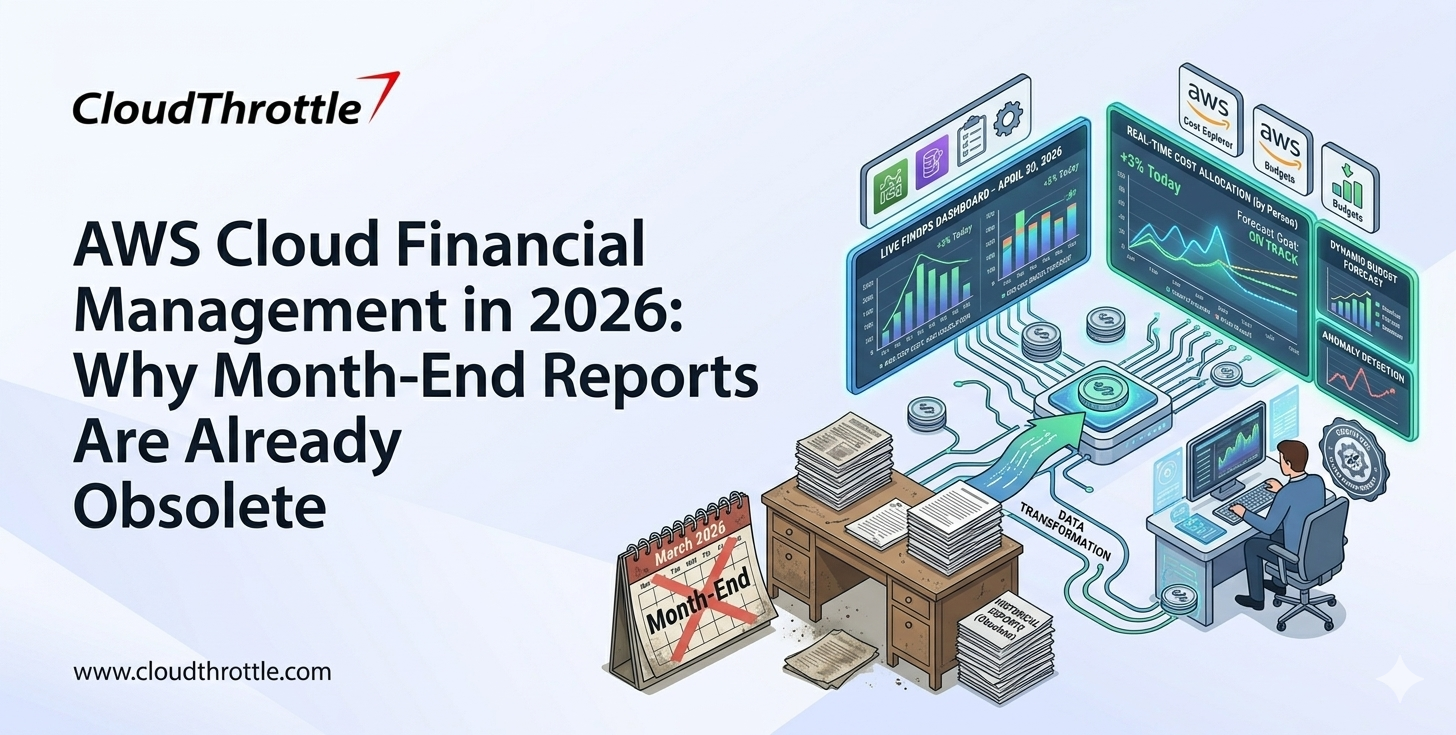
What if your AWS costs spike today, but you only find out at month-end? In 2026, that delay is a serious risk. AWS environments are dynamic, with costs changing continuously due to auto-scaling and continuous deployments. Month-end reports only show what has already happened, not what is happening now.
This is why AWS Cloud Financial Management has shifted toward real-time visibility. Teams can monitor and optimize costs continuously instead of reacting too late with AWS FinOps practices. Let us explore how AWS Cloud Financial Management works in practice, with a focus on cost visibility and control.
Did you know that?
- Amazon Web Services holds about 30% of the global cloud infrastructure market.
- AWS serves customers globally across a wide range of industries and regions.
- AWS has millions of active customers worldwide.
What Is AWS Cloud Financial Management?
AWS Cloud Financial Management is the practice of managing and optimizing cloud costs as usage grows. It brings together finance and business teams to ensure spending stays controlled and aligned with business goals.
In simple terms, finance sets budgets and limits, engineering makes cost-aware technical decisions, and operations monitors how systems impact spending. This collaborative approach is called FinOps. It helps organizations plan better and stay financially accountable while scaling in the cloud.
Why Month-End Reports Fail in Modern AWS Environments
Month-end reporting no longer matches the speed of AWS usage. AWS Cloud Financial Management now depends on timely visibility and action during the billing cycle. A delayed summary can explain what happened, but it cannot change the cost decisions that already reached the bill.
- Delayed Visibility Creates Reactive Decision-Making
Month-end reporting creates a timing problem before it creates an analysis problem. AWS Cost Explorer typically updates cost data at least once every 24 hours, and current-month estimates become visible about 24 hours after setup. AWS also provides AWS budgets and cost anomaly detection so teams can spot unusual spend during the billing cycle.
A report reviewed after the month closes may explain a spike, yet the cost has already been incurred. That delay turns AWS cost management into a reactive process instead of an active control system.
- Variable Workloads Break Static Reporting Models
Static monthly summaries fit fixed infrastructure far better than AWS consumption pricing. Amazon EC2 Auto Scaling adds capacity during peak demand and removes capacity as demand falls. AWS Lambda also scales automatically, and its pricing is tied to requests and compute duration. Short traffic surges can therefore create short spend surges.
A single month-end total hides that pattern, so teams lose the operating context needed to judge whether the cost increase came from real demand or weak control. That is one reason AWS FinOps depends on ongoing review rather than retrospective reporting.
- Traditional Reporting Lacks Granular Cost Context
A useful cost review must show more than the final total. AWS Cost Explorer supports hourly and resource-level analysis. AWS Cost and Usage Reports can be configured at hourly or daily granularity, and a monthly view is available as well. Those reports can also include resource IDs and cost allocation tags. This level of detail helps teams trace spend to a service or workload owner.
Traditional month-end summaries usually compress those signals into one number, so service-level and team-level cost drivers remain unclear. That gap weakens AWS financial management because leadership can see the total spend, yet the source of the spend stays blurred.
- Missed Optimization Opportunities Reduce Savings
Optimization becomes less effective when reviews happen too late. AWS provides tools like Cost Explorer, which periodically updates cost insights and daily recommendations, AWS Budgets, which sends alerts based on actual and forecasted spend, and Cost Anomaly Detection, which flags unusual usage early. If reports are delayed, these tools are not used in time.
As a result, waste continues for days or weeks, and savings opportunities are reduced because the issue remains unaddressed for longer. This is why month-end reporting is no longer enough for cloud financial management strategies in 2026.
Traditional vs Modern AWS Cloud Financial Management
Disclaimer: For informational purposes only, based on publicly available information at the time of publication. Pricing, features, and capabilities may change; verify with vendors. No endorsement or warranties implied.
Top Benefits of AWS Cloud Financial Management
Here are the most promising benefits of AWS Cloud Financial Management:
- Real-Time Cost Visibility Improves Spend Control
One of the biggest advantages of AWS Cloud Financial Management is near real-time visibility into cloud spend. Teams no longer have to wait for month-end reports to understand where money is going. They can track usage patterns during the billing cycle and spot unusual cost movement early. That level of visibility makes AWS cost management more practical because decisions happen closer to the source of spend. A faster view of cost also helps teams correct waste before it grows into a larger budget issue.
- Better Forecasting Supports Smarter Financial Decisions
A strong AWS financial management practice gives organizations a clearer way to plan future cloud spend. Finance teams can compare current usage with budget targets and adjust projections based on actual workload behavior. Engineering teams also benefit because infrastructure decisions can be reviewed with cost impact in mind. This is where AWS FinOps becomes valuable. It connects technical activity with financial planning, which helps organizations move away from static estimates and build a more accurate cloud cost strategy.
- Shared Accountability Strengthens Cost Ownership
Cloud spend becomes easier to control when every team understands its role in cost decisions. Cloud financial management AWS practices support that shift by linking usage data to teams, projects, and business functions. Finance gains cleaner reporting. Engineering gains clearer cost ownership. Operations gain better oversight across accounts and services. That shared accountability creates a stronger model for long-term AWS Cloud Financial Management, because cost is treated as an active responsibility rather than a report reviewed after the spending has already happened.
Applications of AWS Cloud Financial Management
Here are key applications of AWS Cloud Financial Management:
- Multi-Account Cost Control Across Large AWS Environments
AWS Cloud Financial Management plays a critical role in organizations that run multiple AWS accounts across business units or product lines. Cost data often gets scattered across accounts, which makes it hard to identify where spend is rising and which team is responsible for it.
A strong AWS cost management approach brings that visibility into one financial view, so leaders can track shared infrastructure costs and team-level usage with more clarity. This application becomes especially important in 2026 because cloud usage grows across environments much faster than traditional reporting cycles can support.
- Budget Governance for Product and Engineering Teams
AWS financial management is also applied to budget governance at the team level. Product and engineering teams make daily decisions about compute usage, storage growth, and architecture changes, and each of those decisions affects cloud spend.
A structured AWS FinOps practice helps teams connect technical activity with budget ownership, which creates a stronger link between financial planning and actual AWS consumption. This connection improves accountability because teams can review cost impact as part of regular delivery work rather than waiting until month-end reporting explains the problem too late.
- Commitment Planning and Resource Optimization
Cloud financial management AWS practices are widely used in commitment planning and cost optimization. Savings Plans and Reserved Instances can reduce long-term AWS spend, but the value depends on usage patterns and workload consistency.
A cloud financial management AWS model helps teams study actual consumption trends and compare them with commitment decisions, so purchasing choices are based on operational reality rather than rough estimates. This application gives AWS Cloud Financial Management a strategic role because it supports both financial discipline and better infrastructure planning over time.
Conclusion
AWS Cloud Financial Management in 2026 is no longer about reviewing what happened at the end of the month. It is about controlling what is happening right now. Organizations that rely on delayed reporting risk losing both visibility and control as cloud environments become more dynamic. Adopting FinOps and real-time cost management practices ensures that cloud spend remains aligned with business goals and predictable.
Take control of your AWS spending before it spirals. With CloudThrottle, you get proactive cost control, near real-time visibility, and automated budget governance that help your team prevent waste and optimize continuously. Start managing your cloud costs with predictable, real-time governance today.
Note: Information reflects publicly available sources at the time of publication and may change